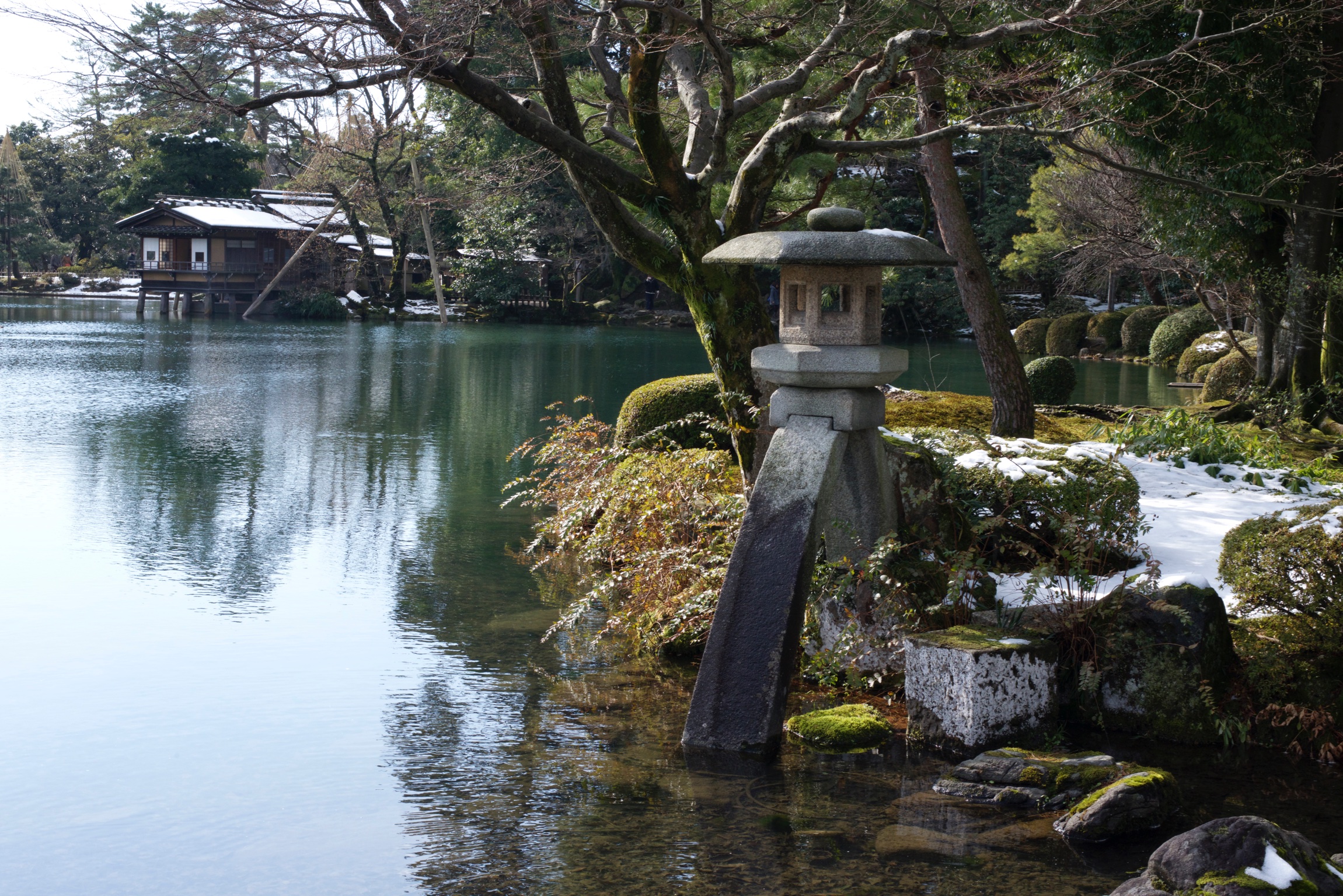
Now that the bullet train between Tokyo and Kanazawa is running (started March 2015), reaching this seafood haven on Japan’s west coast is much easier. Easily slotted into a trip between Kyoto and Tokyo, I think there’s enough to fill at least a one full day or two day stopover – two nights best, so you can squeeze in a couple of dinners. Kanazawa has been referred to as “Little Kyoto” due to areas which retain their Edo era look but I think the best reason to visit (besides for the great seafood) is Kenroku-en, known to be one of the three great gardens of Japan.
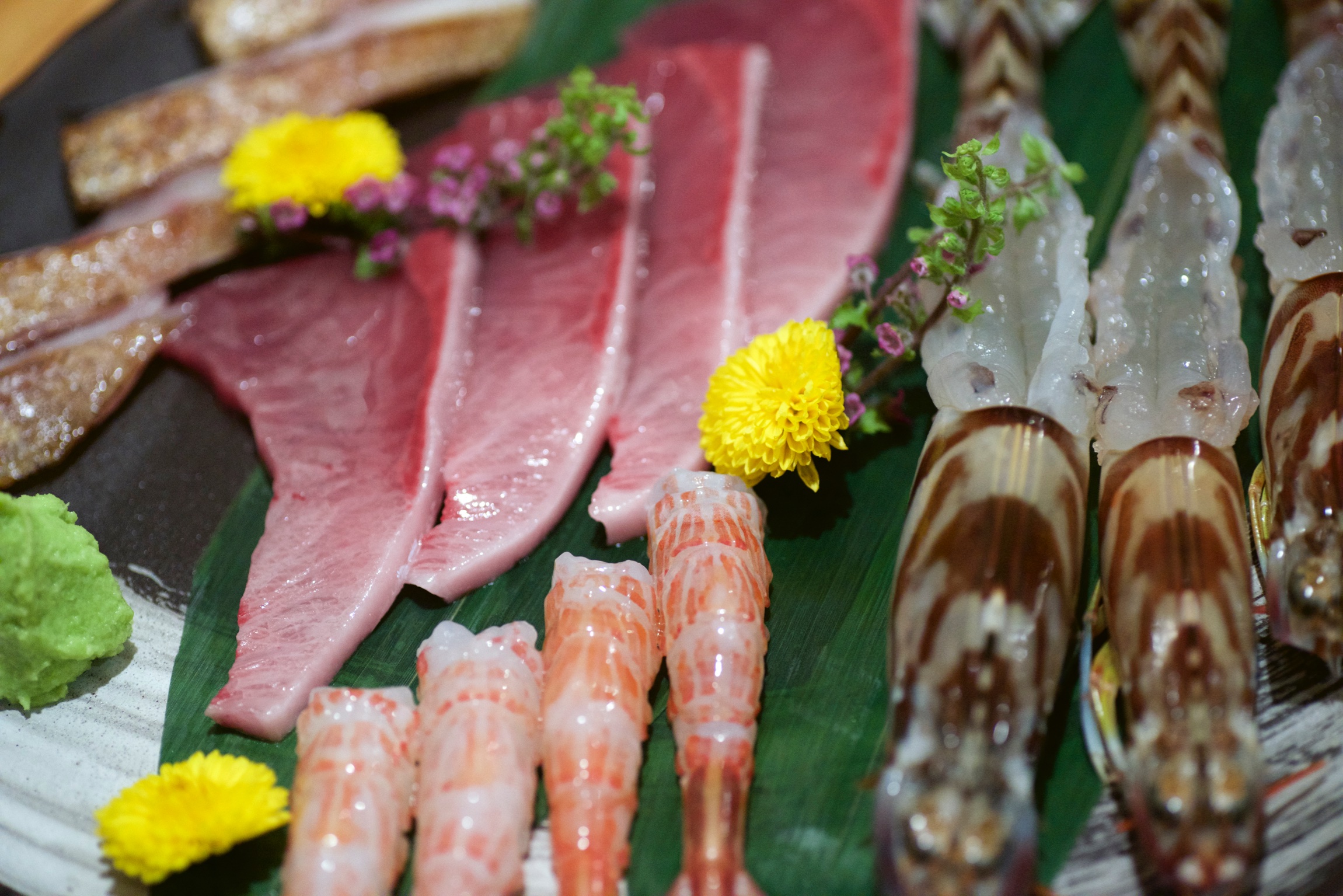
I arrived into Kanazawa by road from Shirakawa-go, which in itself is a pleasant and scenic journey through the Hida mountains. Our first move that evening was dinner at Koide, a highly regarded but relatively expensive Izakaya (casual bar that serves food). While it has got a decent selection of local and regional sake, I think Koide’s strength is actually its food. The sashimi, crab and grilled nodoguro (black throat sea perch – a fish) were very fresh and a good size.
As no one at Koide speaks english and its menu is only in Japanese, I asked the concierge team at the Hotel Nikko, where we were staying, to help translate the menu for us. Both Koide and the concierge were extremely helpful, with Koide faxing over their menu on the day itself, since this changes daily.
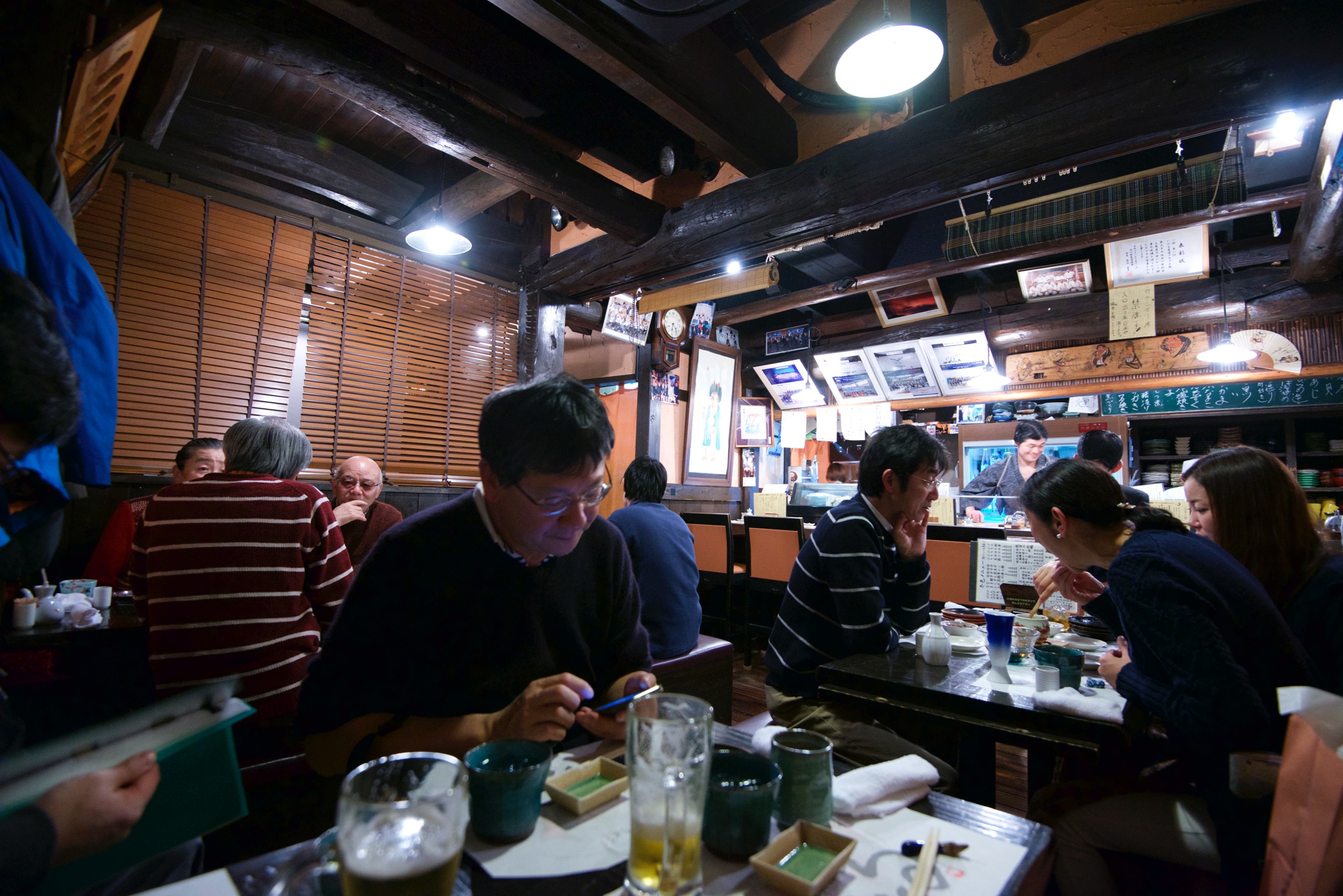
The other Izakaya we went to was Itaru Honten, extremely popular with locals so reservations are a must. The food quality is a notch lower than Koide but it has a convivial atmosphere and is very reasonable.
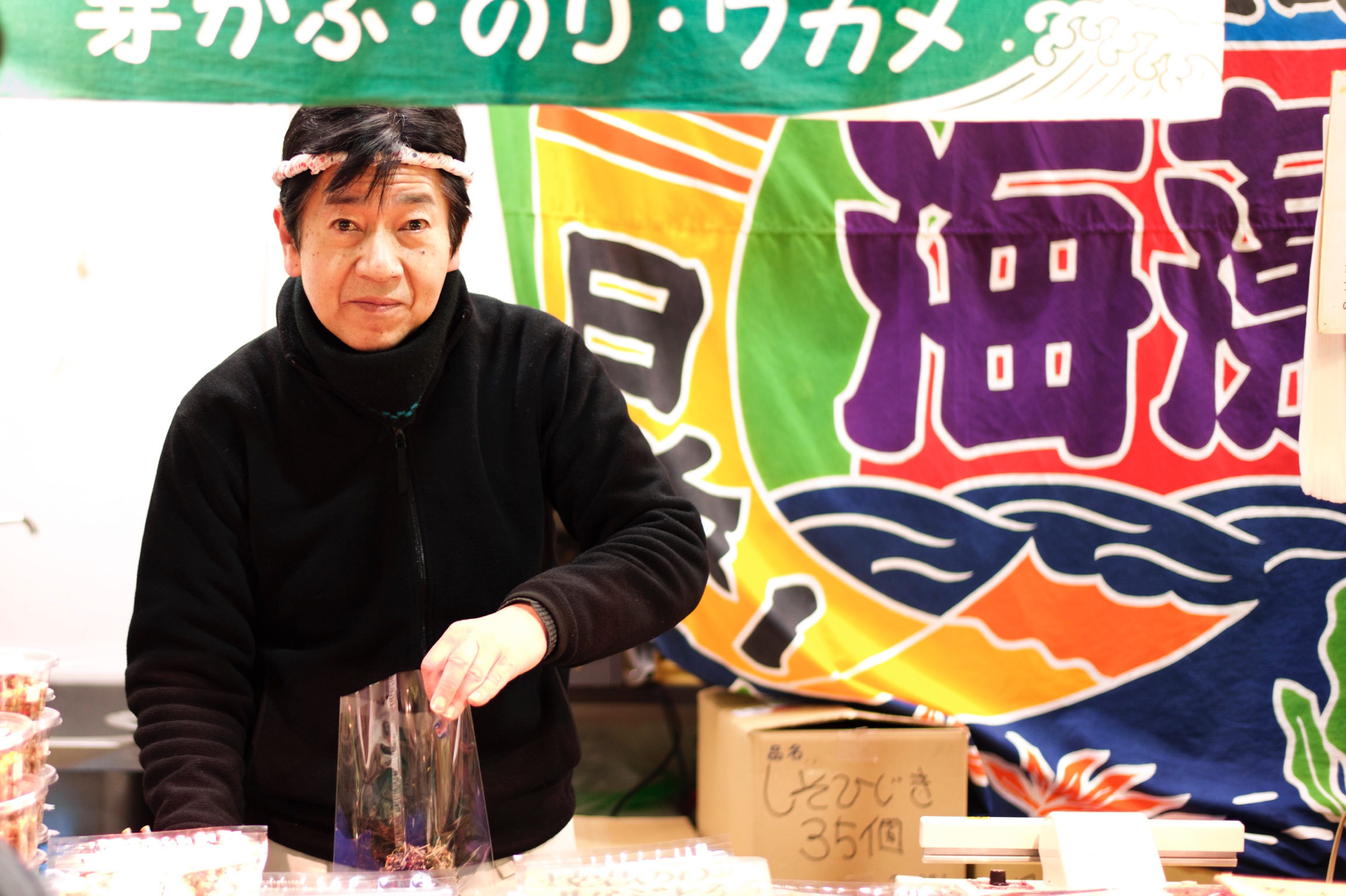
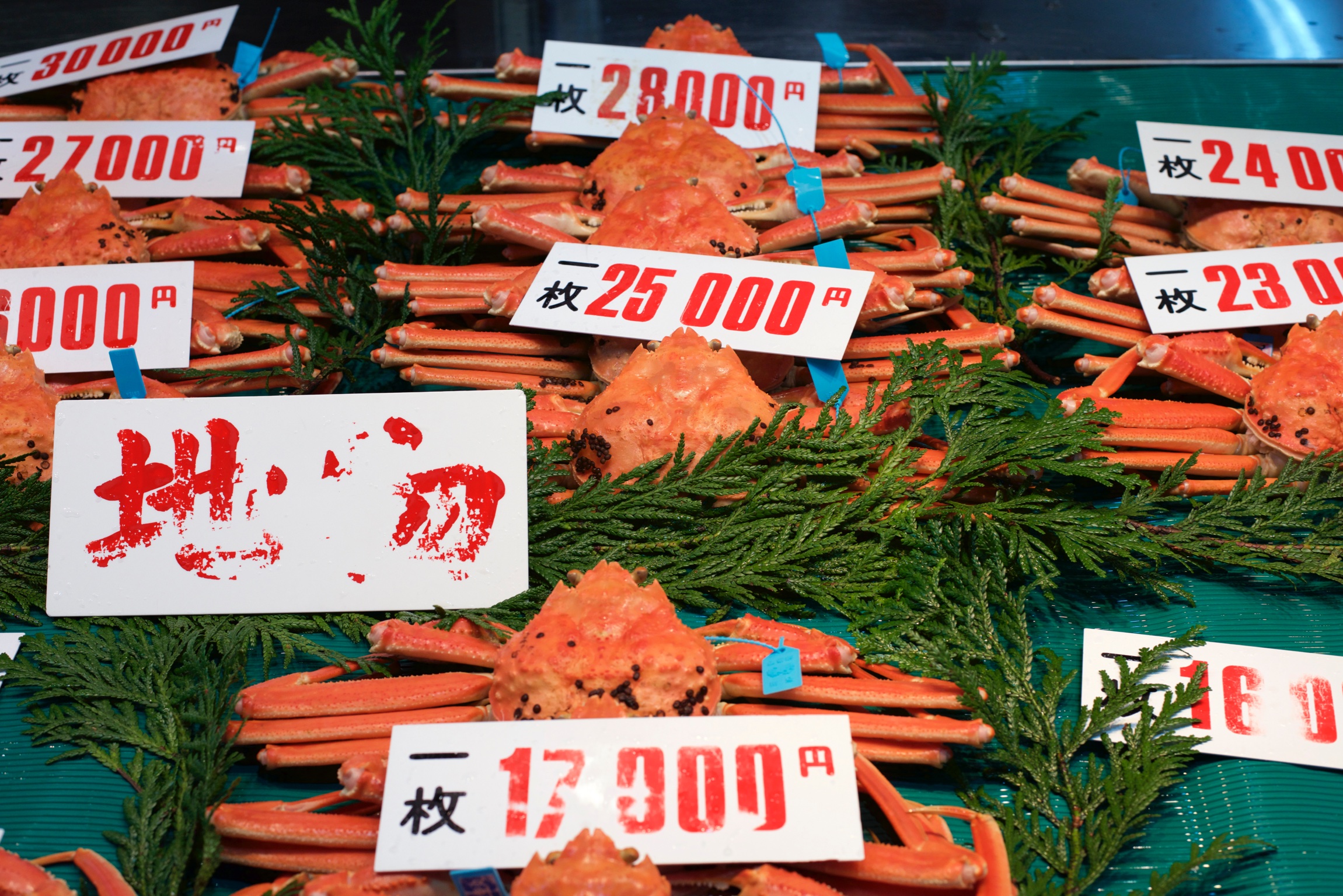
For our one full day in Kanazawa, we started the morning with a walk to Omicho market. Omicho pales in comparison to Tokyo’s famous Tsukiji and to the variety of Kyoto’s Nishiki, but it was still fun to walk through for an idea of the local fish and produce. The best fish from the Sea of Japan flow through Kanazawa. So, no surprise, we ended up having a late breakfast at a sushi restaurant, Yamasan Sushi, at the market. Excellent way to start the day!
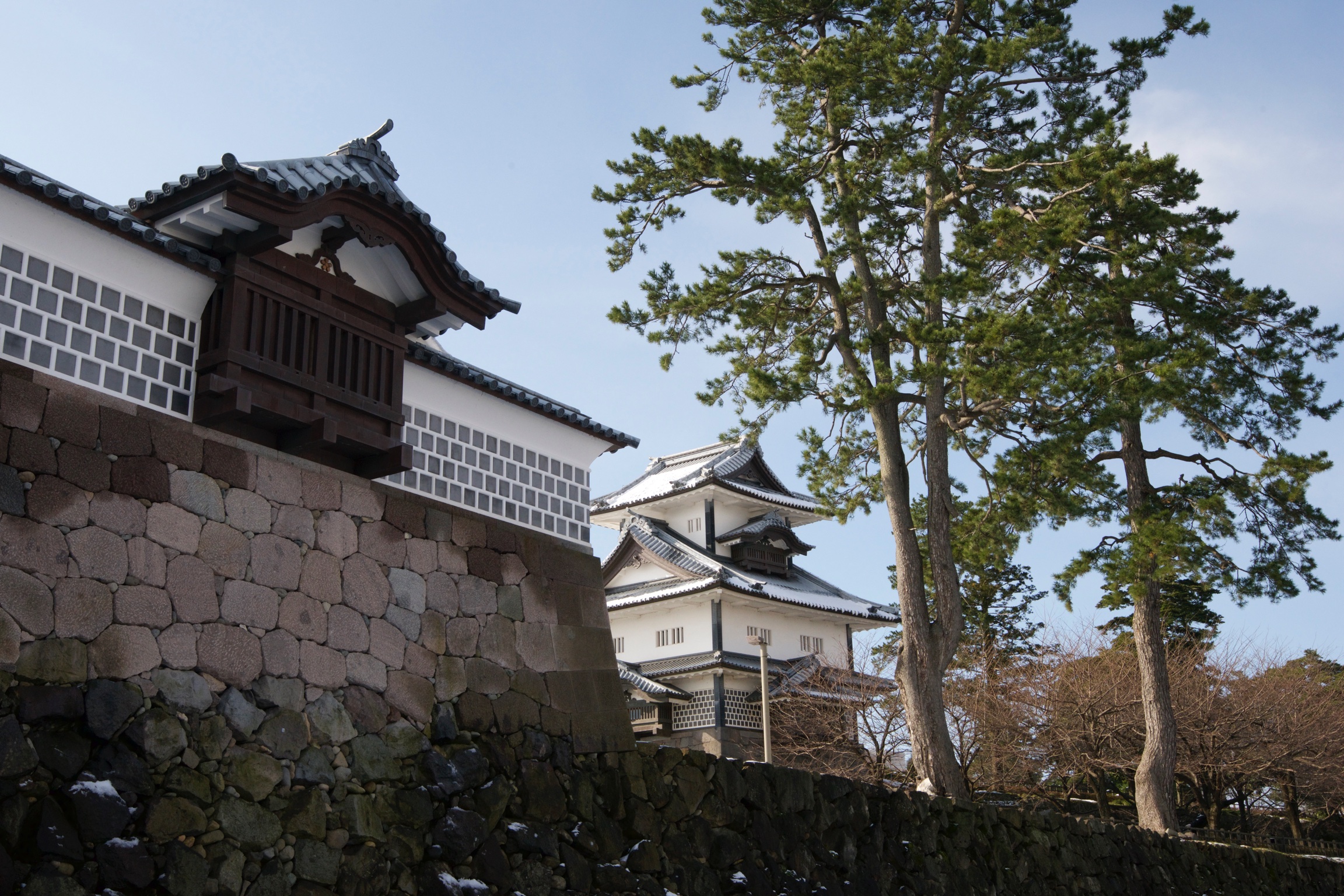
We then walked on to Kanazawa castle and through its grounds to Kenroku-en. We opted to skip going into the castle structures, as most of its buildings are recent reconstructions. But the walk through its park gates should provide some sense of the place and is a nice way to approach the garden.
I would allocate around two hours at Kenroku-en, especially if you’ve got a camera – there are lots of photogenic spots. Kenroku-en, which spans more than 11 hectares, is a great garden to stroll around, it’s landscape changes as you move around so you actually don’t get much repetition in scenes. Being here in winter was special as snow covered some of the ground. But I would love to come here in late spring when the irises and azaleas are out.

After Kenroku-en, we walked toward the Kanazawa Museum of Contemporary Art where we stopped by for a cake and coffee.
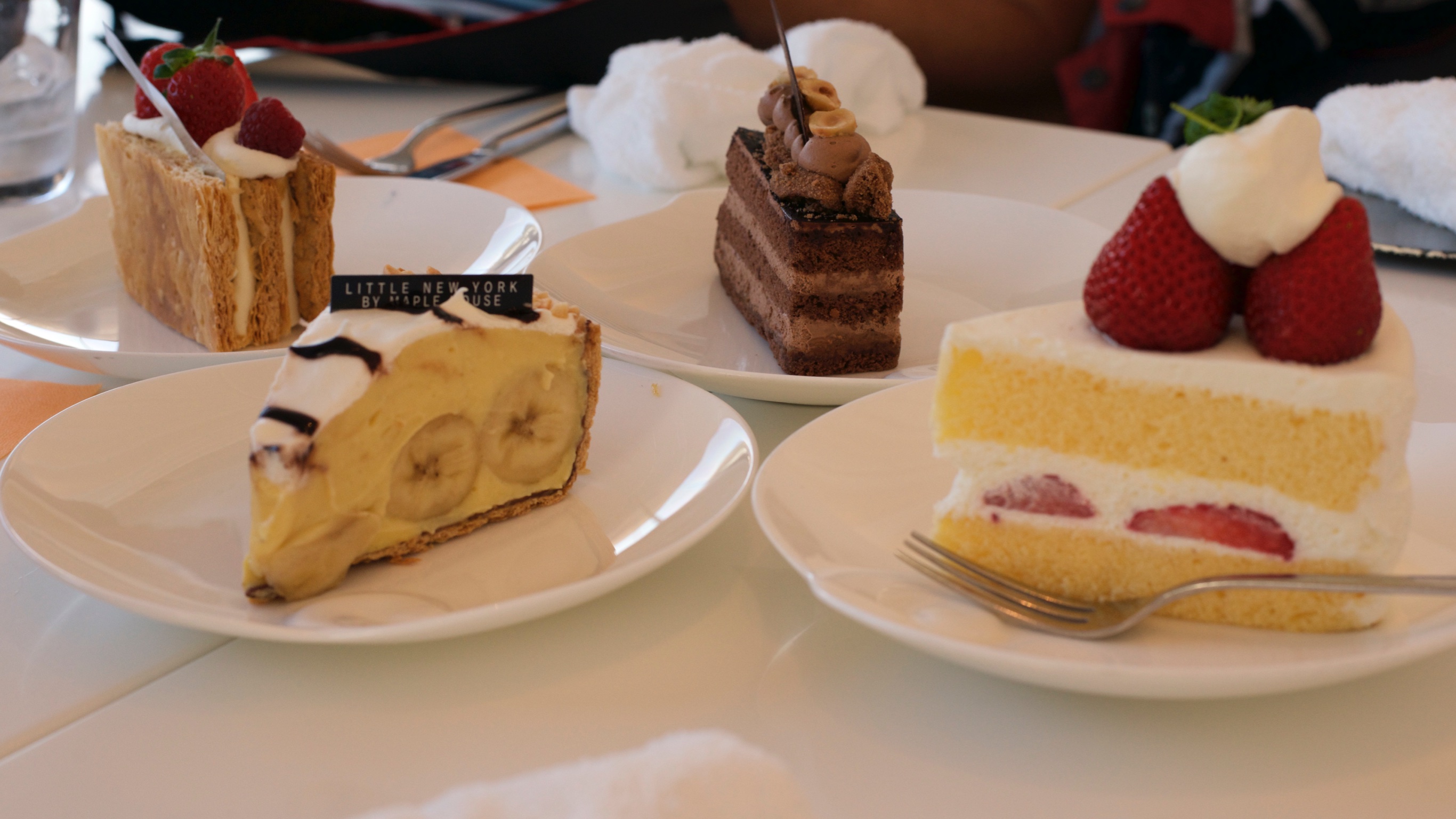
The cake was really good – no surprise given the high quality of everything we’d eaten thus far. I would have loved to have time to visit the museum’s exhibits but we had to be at Myoryuji temple by 2:30 pm for a visit.
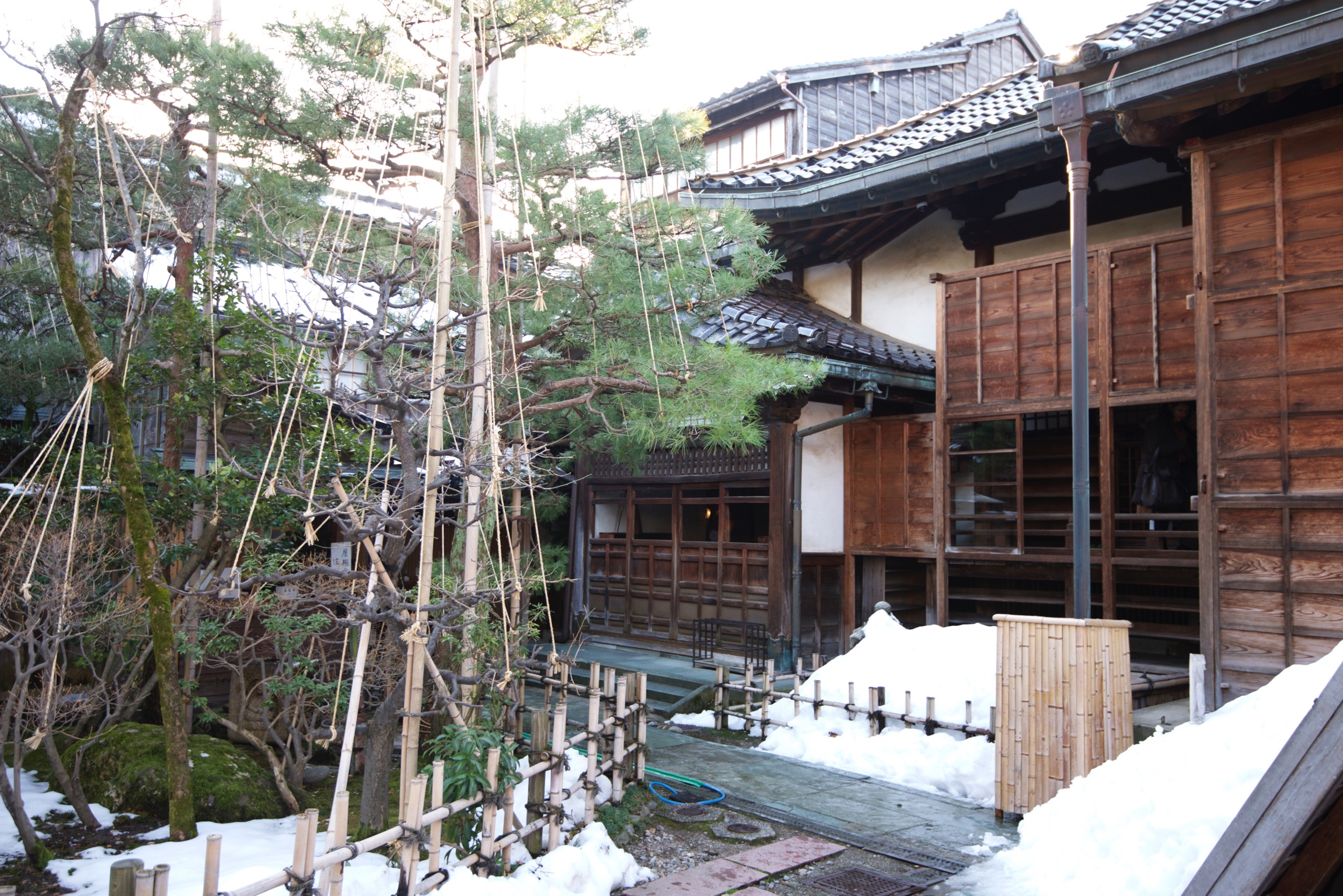
Myoryuji is better known as Ninja Temple, due to its many secret passageways, but it’s actually a buddhist temple built during the Edo period. It’s around an hour long guided visit so you have to book a slot in advance. This can be arranged through your hotel concierge if you have problems contacting them yourself. After the seriousness of Japan’s other temples and shrines, Myoryuji is unique and well worth a visit, and a place that kids would probably enjoy. The guides only speak Japanese but they have prepared leaflets with the english translation.
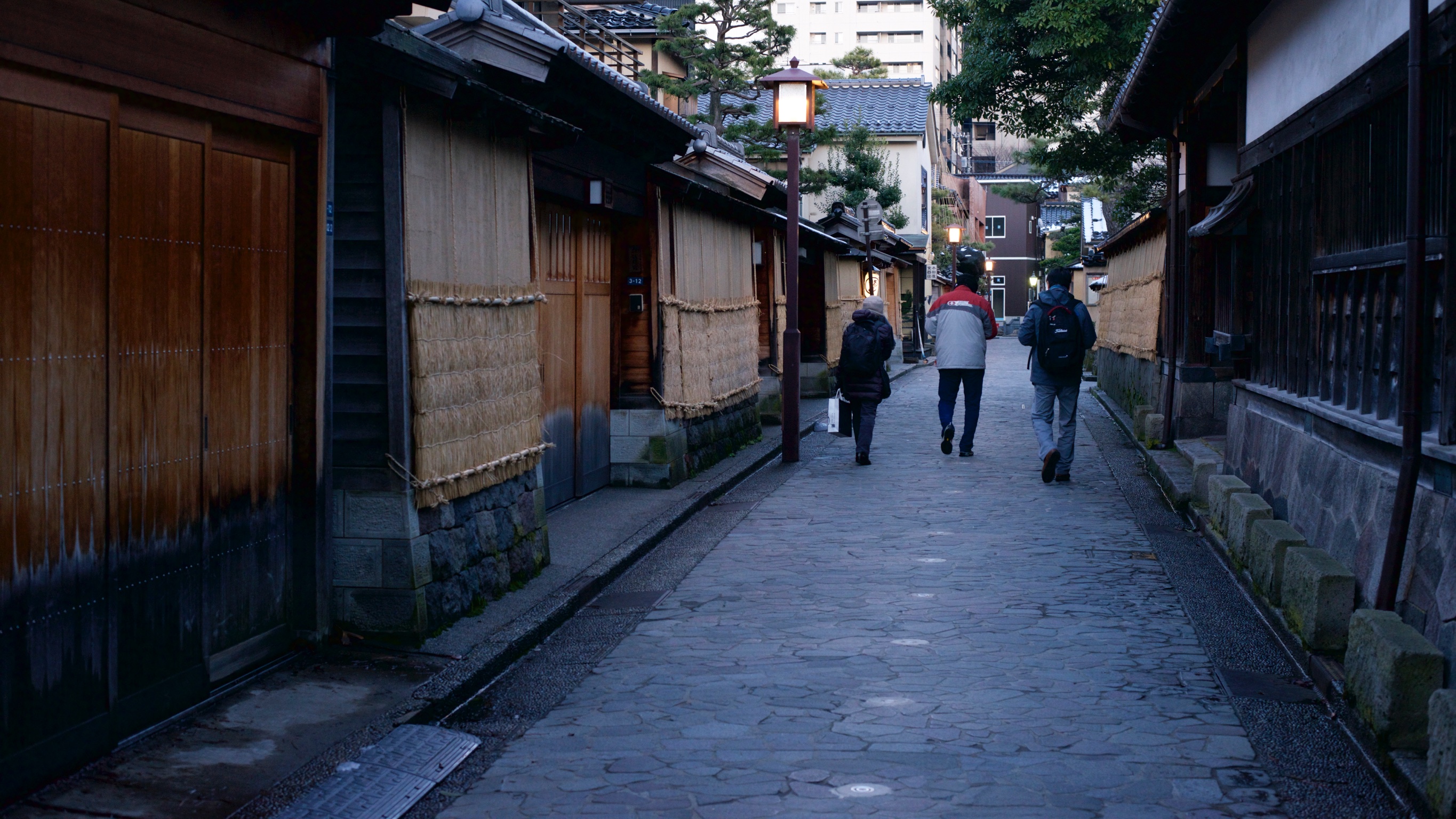
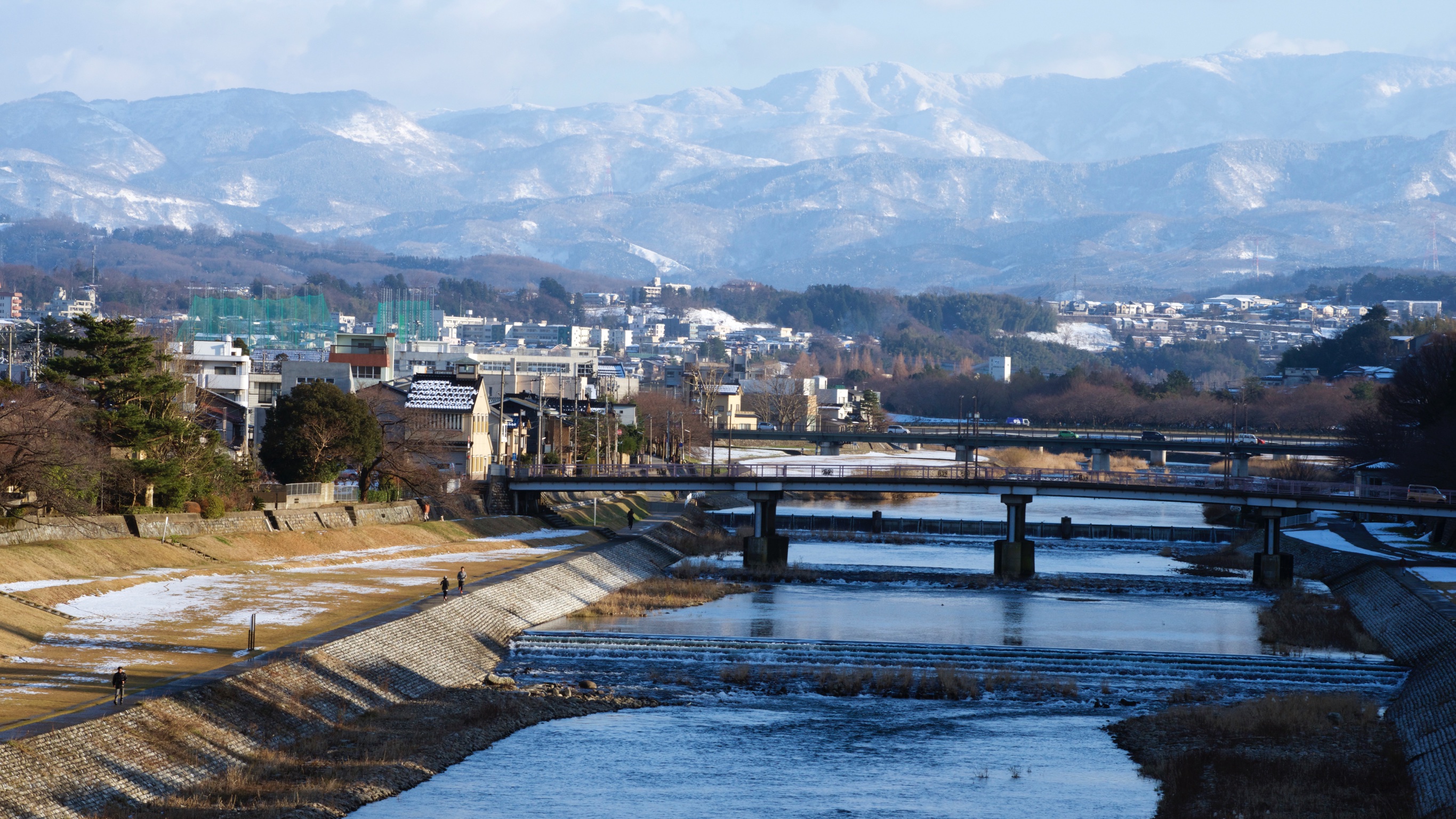
After Myoryuji, we walked back down the hill and across the river towards the Nagamachi Samurai District. We had a nice view of the city and the surrounding mountains on the way. You can visit one or two of the well preserved Samurai houses here but our main reason to visit was to buy Kutani porcelain from Kaburaki, which has a large selection in their Nagamachi store. Kutani porcelain originated in the Kanazawa area so if you’re a fan of ceramics, this is another good reason to come to Kanazawa. For the same item, I noticed that prices are lower here than in Kyoto and Tokyo.
By this time, sun was setting, and we were due for our dinner at Itaru Honten. If you have more time in Kanazawa than I did, you may want to spend some time in the Geisha district (Higashi Chaya). I opted to skip this as I’d just been to Kyoto, which I think has a more established and larger Geisha area.
If you are lucky enough to get a reservation, and are a fan of sushi, one of Japan’s sushi master chefs is in Kanazawa. His restaurant, Komatsu Yasuke, only opens for lunch and is often booked out months in advance. I wasn’t lucky enough so I’ve got to come back to Kanazawa before he retires. Also, I’ve got to see Kenroku-en again and to buy more Kutani porcelain. Thank goodness for the bullet train.
Suggested Itinerary
Access: Kanazawa sits on the west coast of Central Honshu. The nearest airport is Komatsu – around 40 minutes drive from the town centre or one hour by airport bus. If you’ve flown into Tokyo, however, do try the bullet train to Kanazawa, which takes around two and a half hours. As with other cities in Japan, Kanazawa is well connected by train. Incidentally, a bullet train to Nagano takes around one and a half hours and an express train to Kyoto from Kanazawa will take around two hours and fifteen minutes. Kanazawa can also be reached easily by road from UNESCO heritage sites Shirakawa-go and Takayama. A regular bus service runs through the three destinations but do reserve your tickets in advance especially during peak season.
Stay: I stayed in the Hotel Nikko, which is conveniently located near the train station. Its concierge team was the best I’ve encountered so far – extremely responsive to my emails prior to my arrival and keen to help. Besides Hotel Nikko, there are a number of other hotels near the station. Most of Kanazawa’s sights are within walking distance and there also two dedicated tourist bus routes around the town, hitting all the main attractions.
Length of Stay: I was here for two nights but essentially only one day. I would suggest two nights and two days stay instead – which is what I’ve set out below. You can also opt to use Kanazawa as a base for visiting Shirakawa-go (around one hour’s drive), which would make a good day trip. It would also be a good gateway for a drive up the Noto Peninsula.
Other Tips: If you would like to eat in Komatsu Yasuke, Itaru Honten or Koide, it’s best to make a reservation in advance. See the links/contacts at the bottom of this article.
Day One:
- Arrive in Kanazawa mid-late afternoon. Check-in and go either to the Higachi Chaya (Geisha) or Nagamachi (Samurai) districts, time permitting. The historical buildings open to visitors generally close by 5pm – 6pm. Or check out Kutani porcelain maker Kaburaki in Nagamachi – their store closes at 8pm except on Sundays and public holidays (6pm).
- Dinner: Izakaya such as Itaru Honten (cheap and cheerful) or Koide (costly but really good).
Day Two:
- Morning: after breakfast walk/taxi/bus to Kanazawa Castle and Kenroku-en.
- Lunch: Sushi – at Komatsu Yasutake if you’re lucky enough to score a reservation. Or have lunch in Kenroku-en at Miyoshian, which is located near the southeast section of the gardens. Alternatively, grab lunch at the 21st Century Museum of Contemporary Art – their cafe offers a buffet lunch and a seasonal meal based on local vegetables. I only had cake and coffee but these were really good so I believe their food should be decent as well. Do visit the museum if time permits and exhibits are of interest.
- Mid/late afternoon: walk/taxi/bus to Myoryugi temple for a guided visit (remember to book your slot)
- Evening: walk/taxi/bus back to hotel, drop by shops if interested.
- Dinner: Sushi Ippei or another recommendation from your hotel concierge if you’ve not been able to get into Komatsu Yasutake. Or visit another Izakaya – menus should be varied enough that you don’t have to repeat dishes you had in Koide or Itaru Honten.
Day Three:
- Morning: walk/taxi/bus to Omichi market. Have breakfast at Yamasan Sushi – I would recommend their special Kaisendon or ask for your own mix of fish and rice.
- Depart Kanazawa.
Links to Establishments mentioned in this article:
Hotel Nikko Kanazawa website: http://www.hnkanazawa.jp/english/
Kenroku-en website: http://www.pref.ishikawa.jp/siro-niwa/kenrokuen/e/index.html
Koide (no dedicated website, no english spoken): Tabelog site or ask your concierge or friend to call 076-221-5190 (+81-76-221-5190)
Itaru Honten website (in Japanese only): http://www.itaru.ne.jp/honten.htm or ask your your concierge or friend to call 076-221-4194 (+81-76-221-4194)
Komatsu Yasuke (no dedicated website, can contact through APA Hotel): call +81 76-261-6809
Yamasan Sushi website (in Japanese only): http://www.yamasan-susi.com or ask your your concierge or friend to call 076-221-0055(+81-76-221-0055)
21st Century Museum of Contemporary Art website: https://www.kanazawa21.jp/en/
Myoryuji (Ninja Temple) website: http://www.myouryuji.or.jp/en.html
Kaburaki Kutani porcelain Nagamachi store website (in Japanese only): http://kaburaki.jp/shoho or call: 076-221-6666 (+81-76-221-6666)
For more information on Kanazawa and the tourist bus routes, its tourism website is useful: http://www.kanazawa-tourism.com
[…] itinerary accompanies the narrative in the blog Kanazawa – Little Kyoto, Big Garden, Great Seafood. Read the blog for more […]
I like your blog, pictures so colourful and sharp, easy to read and interesting.
Thank you!