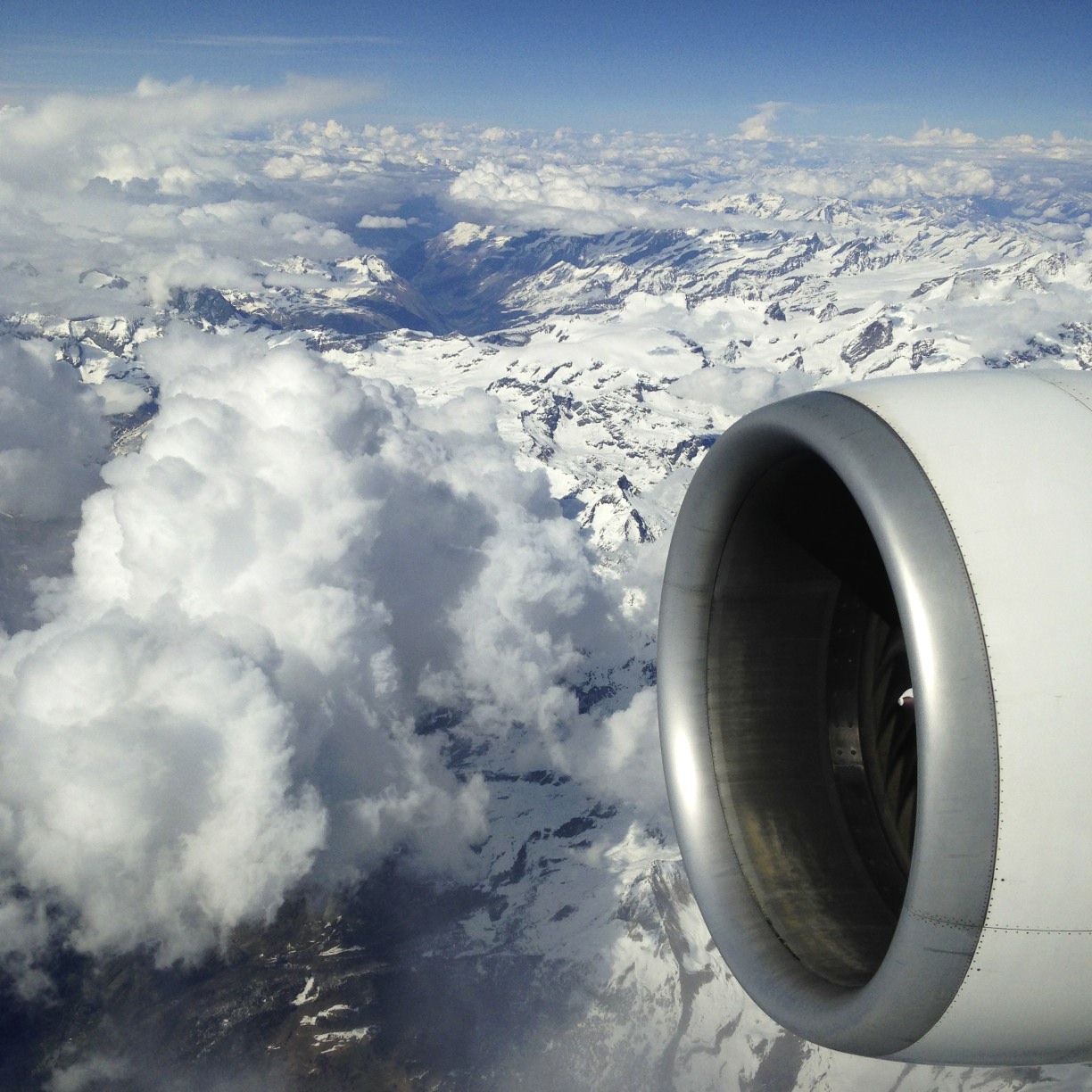
Ever wonder why you feel sleepy as the plane takes off or crave a tomato juice in the air? It may be because the air in the cabin gets thinner. Cabin air pressure is set normally to around 7,000 ft above sea level so it’s not noticeable if you live in Denver but sea level residents may feel fatigue. The good news is that most of us can cope with this level of air pressure and we shouldn’t feel a prolonged weariness although for some others with respiratory issues, there could be more challenges especially since the air is also very dry.
What happens to the air as the plane takes off?
Airplanes have to maintain cabin air pressure at a humanly comfortable level and authorities have set the threshold at 8,000 ft (2,438 m), although most airlines nowadays have cabin air pressure at 7,000 ft. So during the roughly 20 minute take off to cruising altitude, the air in the cabin is adjusted from ground level pressure to this equivalent. At 8,000 ft there is enough pressure on oxygen so that the molecules shrink in size by 25%. So it’s not that there is less oxygen in cabin air, it’s just that there is a smaller amount in each breath taken. So with less oxygen to the brain, we may feel tired as the ascent process is rapid.
Ever wonder why the water bottle you were drinking during the flight compresses as the plane lands? It’s because as the cabin air adjusts back to sea level, the molecules in the air expand again squeezing the bottle, which has air inside the bottle that was sealed at the cruising altitude cabin air pressure. So, we really do breathe more easily when we land!
That’s why some folks are not allowed to fly at certain times.
This is part of the science behind prohibiting scuba divers from diving and flying within 24 hours. Also, those with recent surgeries and bad colds or lung problems may be discouraged to fly. For divers, it’s because nitrogen in scuba tanks may linger in the body and cause bubbles at the higher altitude.
It could be other cabin conditions as well
My cousin Mike, who is a pilot, thinks that the dimmed cabin lights, small windows and the rocking motion of the plane as it taxis along the runway is what makes him feel tired as a passenger. And I have to add that some cabins can be stuffy as well, especially in warm weather. So this combination of factors means I’m asleep during takeoff but can’t sleep thereafter.
Good news is that newer planes are able to maintain a more comfortable air pressure.
Since it takes energy to decompress outside air to be cabin comfortable, the reluctance to reduce the 8,000 ft benchmark has been due mainly to balance fuel efficiency as well as there not really being enough medical evidence to support a change. However, technology advances means that most planes set cabin altitude at 6,500 ft to 7,000 ft. And both the Boeing 787 and the new Airbus 380 planes are able to sustain cabin air pressure at 6,000 ft when at peak cruising altitude. Boeing has studied the impact of altitude on passengers and believes that lowering the cabin altitude to 6,000 ft (1,830 m) is ideal.
The other issue – dry air
Airplane air is dry, with humidity at just around 12%, due to the high altitude. There is talk of adding humidity to cabin air, something which newer planes feature although I’ve not seen to what level of humidity. Boeing indicates that it’s not just the humidity level but an improved filtration system to limit gaseous releases in cabin air that will make passengers more comfortable.
Altitude and dry air could make you crave that packet of nuts
The higher altitude and drier air is going to dull taste (and smell) buds, leading to a penchant for more intense flavours. The problem then is that what you need is water but what you may want is a Bloody Mary or that packet of peanuts with a Coke. Now you know why tomato juice is suddenly so popular on a plane – Lufthansa actually conducted a study on this. Either way, the additional sodium in what you’re craving is not going to help rehydrate you. Dr. Chong Yeoh Wei, former president of the Singapore Medical Association, mentions that “the 8,000 ft pressurised cabin makes water disappear if you leave a cup of water for some time. So drinking lots of water is key, (while) caffeine and alcohol dehydrates you further.”
Can we do anything to feel better?
Firstly, if you have a choice of which aircraft to fly, it’s better to go with the newer models – namely the A380 or 787, which have a lower cabin air pressure. I wear compression socks as it takes forever for swelling in my legs to reduce after the flight. The compression helps blood flow during the flight. Some suggest taking an aspirin before the flight, which is also meant to help with blood flow (which is also what some high altitude hikers do to try to ward off hypoxia). And of course, stay away from the nuts and alcohol.
Someone always has a bright side
Not many people think like fitness trainer Hadi Omar (of Pure Fitness in Singapore) does. When I mentioned this issue with cabin pressure, he said it was “an opportunity to do some high altitude training”. Oh yay…inchworms and burpees down the aisle.